
Why Kids Need the Outdoors, Even in Winter
8/24/2026
Why Kids Need the Outdoors, Even in Winter
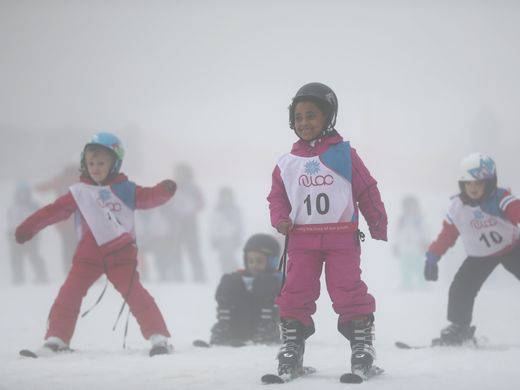
When temperatures drop, children naturally begin spending more time indoors. The days get shorter, recess is more likely to move inside, after-school play decreases, and screens often replace hours that might have been spent outdoors during warmer months. For children growing up in communities like Newark, Paterson, and New York City, access to large outdoor spaces and winter recreation can be even more limited. At Winter4Kids, we believe winter should not be a season when children retreat indoors. It should be another opportunity to move, explore, learn, and grow.
Research supports just how important that opportunity can be. Children are more physically active when they are outdoors, yet most school-age children are not getting the recommended amount of daily physical activity. Winter can widen that gap, making intentional access to outdoor recreation even more important.
Kids Aren't Moving Enough
Children and adolescents ages 6 to 17 should get at least 60 minutes of moderate-to-vigorous physical activity every day, according to federal physical activity guidelines. Regular movement helps build stronger bones and muscles, supports cardiovascular health, contributes to healthy development, and is associated with improved cognition and reduced symptoms of depression.
Despite these benefits, only about one in four children ages 6 to 11 gets at least 60 minutes of physical activity every day. That means roughly three out of four children are falling short of the recommended amount of daily movement. During the winter months, colder temperatures and shorter days can make it even more difficult for children to be active outside.
Being Outside Changes How Kids Spend Their Time
Getting children outside does more than change their surroundings. It changes how they spend their time. Research consistently finds that children are more active outdoors than indoors. Recent international research found children were sedentary during approximately 38% of their outdoor time compared with 67% of their indoor time.
That difference is especially important during winter. An afternoon spent indoors can easily become several hours sitting with a phone, tablet, television, or video game. Outside, the environment naturally creates opportunities to walk, play, explore, and move. On a mountain, that movement becomes even more significant as children walk in equipment, balance, turn, ski, snowboard, get up after falling, and navigate new terrain.
One Day Can Provide More Outdoor Time Than an Entire School Week
The difference becomes especially powerful when we look at the school day. In New Jersey, public schools are required to provide students in kindergarten through fifth grade with at least 20 minutes of recess each day. New York City Public Schools similarly recommends at least 20 minutes of recess for elementary students on most or all school days.
Over a five-day school week, 20 minutes of recess per day adds up to approximately 100 minutes, or 1 hour and 40 minutes, of recess time.
A child participating in Winter4Kids can receive more outdoor time in a single visit than they may receive from an entire week of school recess.
That comparison becomes even more significant over the course of a program. Depending on the program schedule, Winter4Kids participants receive approximately five additional hours outside each week for three weeks, or 2.5 additional hours outside each week for six weeks. Instead of winter becoming a season when outdoor activity decreases, these children have consistent, scheduled time dedicated to being outside, moving their bodies, and learning new skills.
For a participant in a three-week program, that can mean approximately 15 additional hours outdoors. A participant attending 2.5-hour sessions for six weeks also receives approximately 15 additional hours outdoors over the course of the program.
Fifteen hours may sound like a number on a page, but for a child, it represents something much bigger. It is time away from screens and indoor routines. It is time spent moving, learning, interacting with peers, experiencing nature, and developing a relationship with the outdoors during a season when those opportunities can be harder to find.
Where You Grow Up Can Shape Your Access to the Outdoors
For a child living in a community with a backyard, nearby trails, accessible parks, reliable transportation, and a family with the resources and time for recreation, getting outside may seem relatively simple. That experience is not universal. A young person growing up in Newark, Paterson, or New York City may live miles from a ski mountain and may have had little or no exposure to winter sports.
Winter recreation also comes with barriers. Children need appropriate clothing and equipment, families need transportation, and activities such as skiing and snowboarding traditionally require lift access and instruction. Removing those barriers can introduce young people to an environment and an activity they may never otherwise have had the opportunity to experience.
That is an important part of what Winter4Kids provides. The goal is not simply to bring a child to a mountain for a few hours. It is to provide repeated access so that something unfamiliar has the opportunity to become familiar.
Fifteen Hours Can Build More Than Skiing and Snowboarding Skills
During those additional hours outside, children are doing much more than exercising. They are learning how to balance, control their bodies, navigate terrain, listen to instruction, work alongside their peers, and respond when something does not go as planned.
Learning to ski or snowboard involves failure almost immediately. A child falls and has to get back up. They struggle with a turn and try it again. They may be nervous about a new trail and eventually find the confidence to attempt it. With each visit, they can see their own progress.
The child who struggled to stand during the first visit may be making turns by the next. The student who was afraid of the chairlift may eventually be excited to ride it again. The mountain provides children with a place where progress is visible and where persistence produces a result they can actually feel.
Those experiences help develop confidence, resilience, independence, and problem-solving skills. They also create opportunities for connection as children learn alongside classmates, encourage one another, work with instructors, and celebrate accomplishments together.
Access Changes What Is Possible
We spend a great deal of time talking about children's screen time, inactivity, mental well-being, and the importance of exercise. We encourage children to put down their phones, spend more time outside, and become more physically active. Those messages matter, but children can only take advantage of outdoor recreation when they are actually given access to it.
Transportation, cost, equipment, clothing, instruction, and exposure can all determine whether a child has an opportunity to participate in winter recreation. When those barriers are removed, the conversation changes. Instead of asking why children are not spending more time outdoors, we can give them a place and a reason to do it.
For Winter4Kids participants, that can mean 15 additional hours outside over the course of just a few weeks. It means that during a single visit, a child can spend more time outdoors than they might receive during an entire five-day week of school recess. Most importantly, those hours are not simply about accumulating minutes. They are about what happens during them.
Children move. They learn. They fall and get back up. They build relationships. They discover something new. They begin to see the outdoors as a place where they belong.
Winter Belongs to Every Child
A child does not need to grow up in a ski family to become a skier or snowboarder. They do not need to own equipment, live near a mountain, or have parents who understand winter sports. A family's income or ZIP code should not determine whether a young person ever gets the opportunity to discover what standing at the top of a mountain feels like.
Research tells us children need at least 60 minutes of physical activity every day and that most are not reaching that recommendation. It also tells us children tend to move more and sit less when they are outside. Winter4Kids turns that research into opportunity by creating consistent, meaningful time outdoors during the months when children can easily spend more of their lives inside.
One visit can provide more outdoor time than an entire school week of recess. One program can provide approximately 15 additional hours outside. Within those hours are hundreds of opportunities to move, try, fail, learn, laugh, build confidence, and discover something new.
That is why getting kids outside in winter matters. We are not simply teaching children to ski or snowboard. We are giving them time and space to move, grow, and discover what they are capable of, while showing them that winter and the outdoors belong to them too.